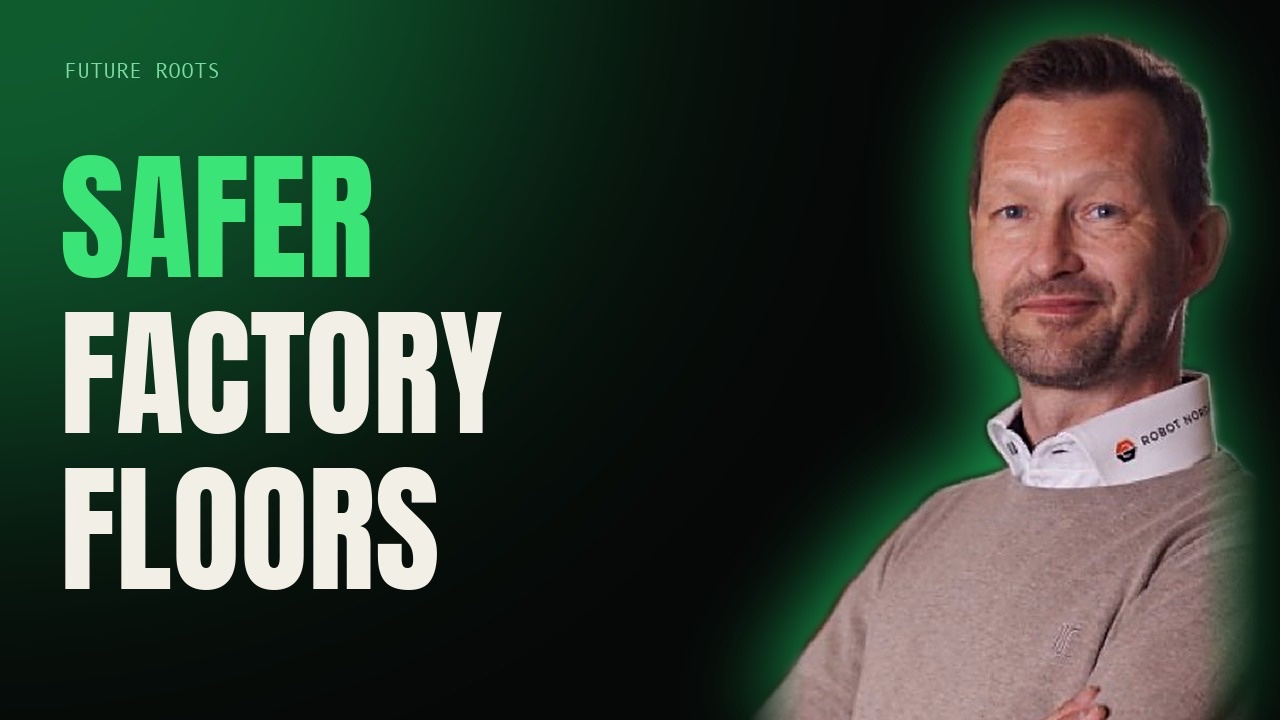
Future Roots · Conversation with Anders Martiny

Anders Martiny on Why Robots Create Jobs Too

Anders Martiny · CEO, Robot Nordic

Watch on YouTube
Anders Martiny on Future Roots

Anders Martiny trained as an electrician, started selling as a teenager by restoring and reselling mopeds, and today runs Robot Nordic, a Danish company that designs, builds and installs custom robot equipment for factories that cannot buy what they need as a standard. He goes into every first meeting with what he calls an empty bag, no agenda, and once waited 14 years for a project that is now up and running.

He explains why full automation is rarely the right target, why you cannot program your way out of a mechanical problem, and why paid pre-projects protect both sides. He also covers selling Robot Nordic to the Swedish listed company Duroc AB, first 51% and then the rest, while staying on as CEO, his view on talking robots and humanoids, and why decades of robot installs have come with more, not fewer, open jobs.

In Anders's words

“So what I'm actually here with is an empty bag. No agenda. Let's talk freely.”

Anders Martiny · 03:55

“What we always see in the branch, and also in my company, is that you cannot program your way out of something mechanically wrong.”

Anders Martiny · 25:58

“When we started to install a robot, they were looking at us that we were terrible people because now we come in and take the jobs. But we have installed so many robots in the world and still we are more and more lack of staff helping to do the products.”

Anders Martiny · 35:46

Key takeaways

  1. Go into the first meeting with no agenda: listen, share what you know, and the business follows, sometimes weeks later and sometimes 14 years later.
  2. Automating 100% of a line is often too expensive and too risky; a 90/10 or 70/30 split with an operator nearby can pay back better.
  3. You cannot program your way out of a mechanical problem. Get the mechanics and the chain of tolerances right before tuning software.
  4. On hard projects, a paid pre-project where both sides invest time and money shows early whether to go further, and saves money if not.
  5. Health and safety for staff now weighs alongside payback, because factories that wear out their people lose them and cannot replace them.

Chapters

Questions people ask

What is Robot Nordic?
Robot Nordic is a Danish robot and automation company. When a factory needs equipment it cannot buy as a standard, Robot Nordic designs it, does the engineering, mounting, build-up and run-in, runs a factory acceptance test in its own facility and a site acceptance test at the customer. It mostly builds on standard robots from the big brands and invents its own equipment when space or speed requires it.
Who owns Robot Nordic?
Anders Martiny sold 51% of Robot Nordic to Duroc AB, a Swedish listed company, after being approached at an exhibition. He sold the remaining shares in the summer of 2026 and remains the company's CEO.
What is machine tending?
Machine tending is when a robot puts a part into a machine, waits while the machine mills or grinds it, then takes it out and puts a new one in. While it waits, the robot can wash, polish or grind other parts next to the machine. Robot Nordic has built robots with measuring tools that check a precise part before it is removed, since it cannot be put back in the same position.
Should a factory automate 100% of a production line?
Anders Martiny says usually not. Covering the last 10% can make a project extremely expensive and risky, so he suggests splits like 90/10 or 70/30 with an operator nearby, based on where the payback curve lands and what skills the factory has on site.
Do robots take jobs from factory workers?
Anders Martiny says that when he started in the industry, people saw robot installers as taking jobs. Yet after many robots installed, factories have more and more trouble finding staff, and he sees AI and humanoids helping with that shortage rather than putting people out of work.

More conversations

Be a guest

Building what's next? Tell your story on Future Roots.

Forty-minute conversations with the investors, founders and leaders building the next twenty years.

Apply to be a guest