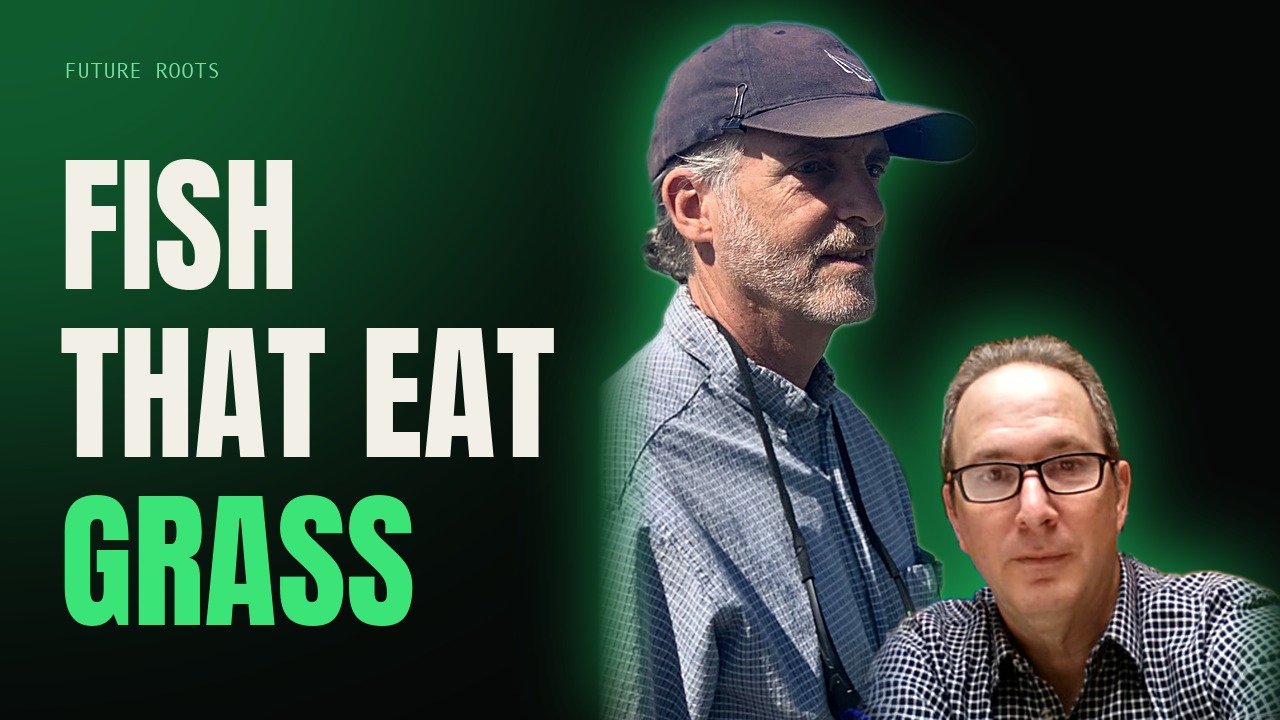
Future Roots · Conversation with Bill Sosinsky & John Reid

Bill Sosinsky & John Reid on Grass-Fed Tilapia and the Cheapest Protein

Bill Sosinsky & John Reid · Director of Business Development (Bill) and CEO (John), Aquasafra

Watch on YouTube
Bill Sosinsky & John Reid on Future Roots

John Reid ran Bioshelters, later Waterfield Farms, for 20 years, growing tilapia, freshwater shrimp and herbs in an integrated aquaculture and hydroponic system that supplied about 650 supermarkets across the Northeast the same day they were harvested. He then took over Aquasafra, a Florida tilapia hatchery with a line of genetics he calls far ahead of his own, and built a feed program around it that now ships about a hundred tons of feed a month alongside the fry most of its Florida farms use.

Bill Sosinsky, an environmentalist for over 50 years who runs the education nonprofit Energime, joined after an introduction from Cornell's Mike Timmons because he saw grass-based feed as the answer to shrinking ocean feed stocks. Together they explain why their fish keep growing in water up to 95 or 96 degrees while other lines die, how a network of remote hatcheries serves smallholder farmers with fry, feed and training, and how a grass-feed market built through tilapia could move poultry, hog and cattle feed onto grass and pull carbon into the soil.

In Bill's words

“I wrote the question: what can I do that'll do the most people the most good, that I will be good at.”

Bill Sosinsky & John Reid · 00:29

“Everything has to work together or nothing works. That's the way our natural environment works.”

Bill Sosinsky & John Reid · 14:08

“Catastrophe already. This is not the future, this is now.”

Bill Sosinsky & John Reid · 24:16

Key takeaways

  1. Climate resilience is already a farm problem: in recent summers farms from Honduras to Colombia lost 40 to 60 percent of their crop to heat, and in the Dominican Republic a neighboring line lost 90 to 100 percent while Aquasafra's fish kept growing.
  2. Lower protein, lower cost: Aquasafra's fish grow on a 32 percent protein diet as well as other lines do on 36, and breeding aims for 28 and then 25 percent, where grass can enter the recipe.
  3. The feed mill is the missing wheel: by becoming a large feed customer, Aquasafra can ask mills to add more grass, and the same recipe can later be adjusted into chicken feed.
  4. Remote hatcheries solve more than supply: each one ships fry and small weekly amounts of feed to 30 to 100 smallholder farms, which removes both a logistics problem and a credit problem.
  5. Training is the bottleneck for scale: the plan starts with ten remote hatcheries that become training grounds for the 300 to 500 the market needs.

Chapters

Questions people ask

What is Aquasafra?
Aquasafra is a tilapia hatchery based in Florida that sells tilapia seed, meaning baby fish, together with a feed program built for its own genetics. John Reid says it supplies about a hundred tons of feed a month to farms across Florida, plus most of the fry they use, and is expanding into the Dominican Republic and across the Caribbean and Central America.
Why are Aquasafra's tilapia more heat tolerant?
According to John Reid, most tilapia stop growing or die when water reaches about 91 or 92 degrees Fahrenheit, while Aquasafra's fish can stay on full feed up to about 95 or 96 degrees and survive brief spikes to 98 to 100. He describes them as strongly disease resistant and able to handle cold as well, so farmers don't lose their crop in a heat wave.
How can tilapia be raised on grass-based feed?
Short grass is cut, ground and processed in a feed mill into a compound pellet with added vitamins and minerals, not chopped hay. John Reid fed his tilapia a fully grass-based diet at commercial scale for almost nine years, and Aquasafra is breeding fish to grow on lower protein diets so more grass can go into the recipe.
How does grass-based feed help with climate change?
Bill Sosinsky and John Reid argue that converting farmland from tilled corn and soy to grasses stops those fields from emitting carbon and starts storing it in the soil, while rebuilding topsoil. Grass needs little fertilizer and no pesticide or herbicide, and it grows back after each cut. They see tilapia feed as the way to build that market, which poultry, hog and cattle feed could follow.
How does Aquasafra work with smallholder farmers?
Aquasafra ships broodstock from its core hatchery in Florida to remote hatcheries, each staffed by two of its people and eight to ten trained local hires, which supply fry to 30 to 100 surrounding farms. Farmers can buy a week's worth of feed at a time at bulk prices, and technicians visit farms to help with water quality, feeding and other problems as part of the package.

More conversations

Be a guest

Building what's next? Tell your story on Future Roots.

Forty-minute conversations with the investors, founders and leaders building the next twenty years.

Apply to be a guest