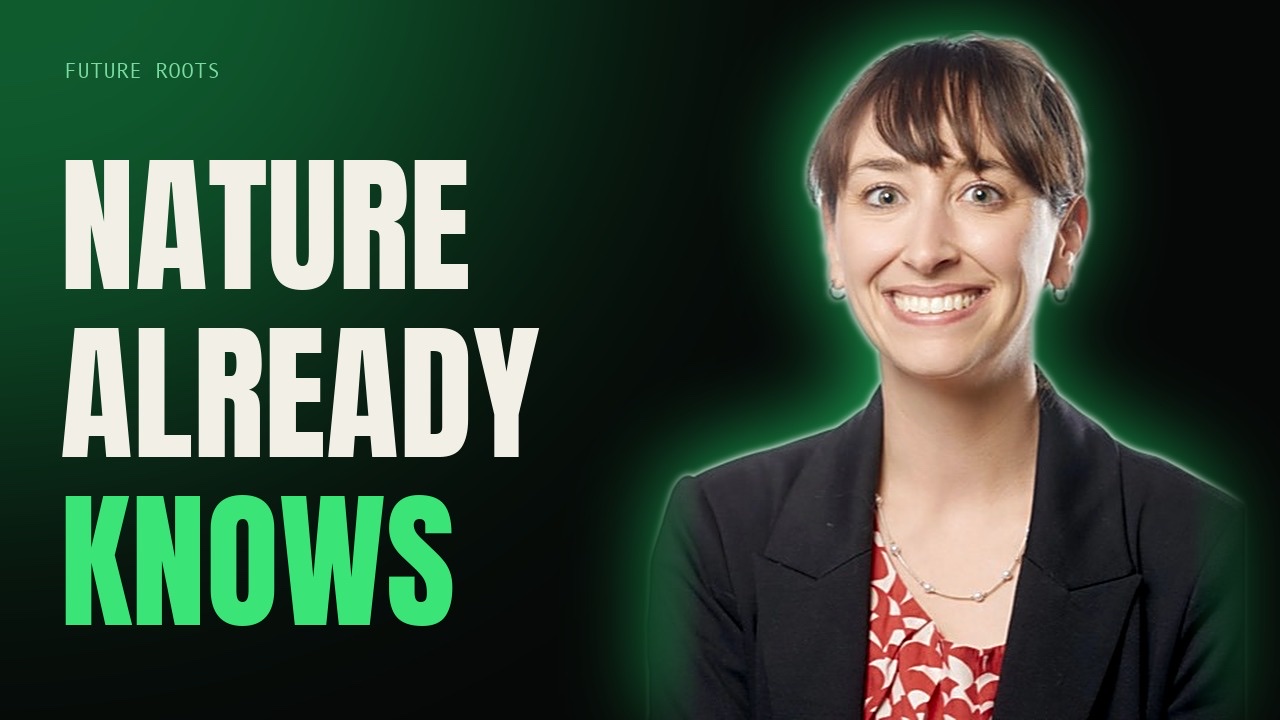
Future Roots · Conversation with Kelsey Wheeler

Kelsey Wheeler on Turning Mucus Into Medicine

Kelsey Wheeler · Founder & CEO, Tulip Biosciences

Watch on YouTube
Kelsey Wheeler on Future Roots

Kelsey Wheeler spent 10 years at MIT with her co-founder, Professor Katharina Ribbeck, studying how the body manages the trillions of microbes that live in and on us. They found that sugars in mucus suppress harmful bacterial behavior without killing the bacteria, and Tulip Biosciences now re-engineers those signaling sugars onto scalable scaffolds so they can be used as therapies.

Tulip's first indication is bacterial vaginosis (BV), which affects about 25% to 30% of women globally; antibiotics fail about 25% of the time and 50% to 80% of women see it come back. Kelsey explains what patient interviews in the NSF I-Corps program revealed about recurrence, the difference between a device path and a drug path at the FDA, early support from the Gates Foundation, how AI helps a small lab focus its experiments, and why she sees BV as the entry point rather than the boundary.

In Kelsey's words

“What we've discovered is that the body doesn't necessarily need to kill these microbes to keep us healthy. We've actually evolved very sophisticated ways of regulating their behavior.”

Kelsey Wheeler · 00:28

“Long term, we view BV as our entry point, not really the boundary.”

Kelsey Wheeler · 17:56

“Women spend more time in poor health despite having longer life expectancies. And so just because something doesn't cause mortality doesn't mean it's not something worth investigating and developing.”

Kelsey Wheeler · 34:33

Key takeaways

  1. The body does not always need to kill microbes to stay healthy: sugars in mucus tell bacteria when not to turn on harmful behavior.
  2. Talk to patients before building. NSF I-Corps interviews showed that women with BV often know their triggers, which points to prevention, not only acute treatment.
  3. A product that makes mechanical claims, such as moisturizing, can go through the FDA as a device in a year or two; a claim about reducing recurrence makes it a drug with full clinical trials.
  4. Pairing a first drug product with the standard-of-care antibiotic fits how providers already treat BV and lowers the barrier to adoption.
  5. Women's health therapeutics are still underfunded: much of the new capital goes to digital and consumer health, while diseases affect women differently and need their own treatments.

Chapters

Questions people ask

What is Tulip Biosciences?
Tulip Biosciences is a company spun out of MIT that builds therapies based on mucus biology. Its platform dissects mucus, identifies the signaling sugars that protect the body, matches them to the bacteria that respond to them, and re-engineers them onto scalable, defined scaffolds. Its first indication is bacterial vaginosis.
What is mucus biology?
Kelsey Wheeler describes mucus biology as understanding both the physical properties of mucus and how it works as an ecosystem for the host and its microbes. Her research found that mucus is more than an inert barrier: sugars in mucus send signals that keep bacteria from turning on harmful behavior, without killing them.
How is Tulip Biosciences approaching bacterial vaginosis?
Tulip aims to restore mucins where the mucosal barrier has been disrupted, so antibiotics can work better and women can recover for longer. Antibiotics fail for about 25% of women with BV and 50% to 80% see it come back. Tulip plans to pair its first drug product with the standard-of-care antibiotic, and is also developing a moisturizing product that would be regulated as a device.
Who founded Tulip Biosciences?
Tulip Biosciences was founded by Kelsey Wheeler, its CEO, with Professor Katharina Ribbeck of MIT, after about 10 years of research together on how the body manages its microbes. The Gates Foundation was an early supporter of the research at MIT because of BV's links to preterm birth and STI acquisition.
How does Tulip Biosciences use AI?
Kelsey Wheeler says AI and computational tools help a small team navigate the very large biological and chemical design spaces it cannot fully control at the bench. Tulip is bringing in models to create a faster feedback loop between its experiments and the next molecule, while experienced hands still make decisions at the bench.

More conversations

Be a guest

Building what's next? Tell your story on Future Roots.

Forty-minute conversations with the investors, founders and leaders building the next twenty years.

Apply to be a guest