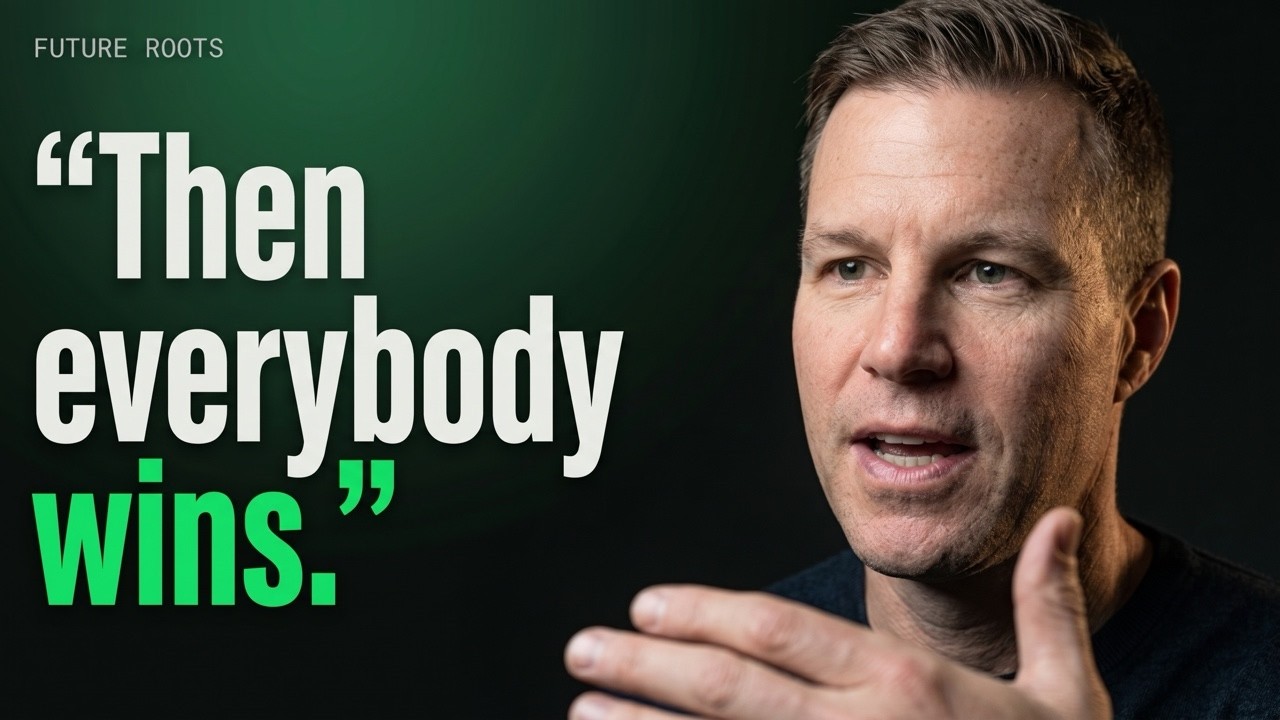
Future Roots · Conversation with Petri Laakso

Petri Laakso on Turning Every Building Into a Carbon Sink

Petri Laakso · CEO, Soletair Power

Watch on YouTube
Petri Laakso on Future Roots

Petri Laakso, CEO of Soletair Power, explains how his company puts direct air capture inside the ventilation systems of ordinary buildings. Because the unit removes CO2 from the air people breathe out, a building needs less fresh air, which can save more energy than the unit itself uses. He describes a module that is shrinking toward the size of a washing machine for an office of around 2,000 square meters.

He also covers where the captured CO2 can go, with concrete mineralization as his favorite option, how greener buildings can attract cheaper loans and higher rents, and why customers now contact the company first. He closes with the health case for lower indoor CO2 in schools and with the path from solar projects to running a carbon capture company.

In Petri's words

“Our mission is to turn all the buildings in the world into an ecosystem that captures CO2.”

Petri Laakso · 01:55

“If we can save energy in buildings and capture the CO2 in the existing infrastructure like ventilation, then when you put the CO2 into concrete component manufacturing, you can use less cement to create the same concrete component and the CO2 will never end up into the atmosphere again.”

Petri Laakso · 20:07

“It's a roller coaster. I mean, you can be king of the world in the morning and then the phone rings and it's the other way.”

Petri Laakso · 46:49

Key takeaways

  1. Buildings are a stable, clean-air platform for direct air capture, and they already move air through ventilation systems, so no new factory is needed.
  2. Capturing the CO2 people exhale means a building can ventilate less fresh air, which can save more energy than the capture unit consumes.
  3. Petri's favorite use for captured CO2 is concrete: it replaces some cement and stays locked in, unlike e-fuels where it returns to the air.
  4. Green buildings can qualify for lower-interest green loans, and tenants with net zero goals may pay slightly more rent, which together can raise a building's value.
  5. For real estate owners, Petri says the offer has to be turnkey, and the end game is selling energy savings as a service so customers pay nothing extra from day zero.

Chapters

Questions people ask

What is Soletair Power?
Soletair Power is a Finnish company that builds direct air capture units designed to sit inside a building's ventilation system. Its mission, in the words of CEO Petri Laakso, is to turn all the buildings in the world into an ecosystem that captures CO2. The company says it is one of the few in the world delivering direct air capture connected to buildings.
Who is Petri Laakso?
Petri Laakso is the CEO of Soletair Power. He previously ran project business as a VP at a publicly listed solar company and worked in universities and R&D organizations, and he joined Soletair in 2019 at the invitation of co-founder Pasi Vainikka.
How does a building-based direct air capture unit work?
The unit is meant to be added as a module to a building's mechanical ventilation system, alongside the filter and fan modules. Petri explains that several modules take turns: one captures CO2 on a sorbent material while another releases it. He says the target is a unit about the size of a washing machine for a building ventilating 3 cubic meters of air per second.
How does capturing CO2 in a building save energy?
According to Petri, people exhale CO2, so a building normally pushes in fresh, sometimes hot and humid, air to dilute it. If the unit captures that CO2, the building needs to ventilate less fresh air. He says the energy saved can be substantially more than the unit consumes, and that data centers can supply excess heat of around 60 degrees Celsius to run it.
What happens to the CO2 that Soletair Power captures?
Petri says the CO2 can go into concrete through mineralization, which he favors because it replaces some cement and keeps the CO2 out of the atmosphere. Other uses he lists include fuels, greenhouses, food made from air by Solar Foods, and carbonated drinks. He names concrete partners such as Carbonaide in Finland and CarbonCure in Canada.

More conversations

Be a guest

Building what's next? Tell your story on Future Roots.

Forty-minute conversations with the investors, founders and leaders building the next twenty years.

Apply to be a guest