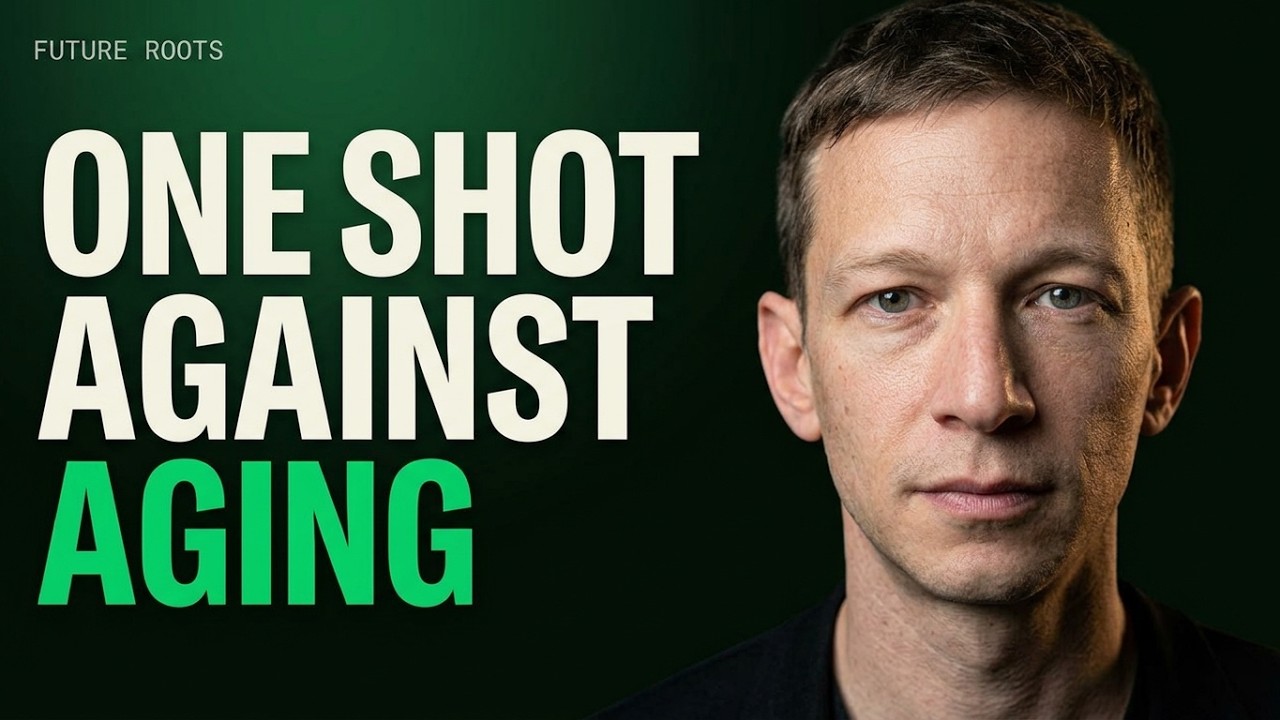
Future Roots · Conversation with Tristan Roberts

Tristan Roberts on Crossing Biotech's Valley of Death

Tristan Roberts · Founder, Dog Years DAO

Watch on YouTube
Tristan Roberts on Future Roots

Tristan Roberts, Founder of Dog Years DAO, explains the biotech valley of death and why he thinks drug development keeps getting more expensive. He describes how his earlier team ran a follistatin gene therapy trial in Prospera on the island of Roatan, where an ethics board and a clinic were available faster and cheaper than in the United States.

A surprise came from that study: two participants with rheumatoid arthritis reported their pain going away, which led him to try the treatment on his family's dog and then to start Dog Years. He also covers gene therapy vectors, whether aging is a disease, who gets access to longevity treatments, and how crypto tokens could reward people and pet owners for finishing a study.

In Tristan's words

“It's the opposite of Moore's Law, and it's stating that around every 3 years the cost of developing a new drug doubles.”

Tristan Roberts · 00:51

“I really want to use crypto tokens as a way of rewarding participants in the study for completing the study. This is one of the biggest problems in clinical research: people sign up, they get the treatment, and then they ghost you.”

Tristan Roberts · 29:21

“People like to say just trust the science, but you always have to ask who's funding the science, who's funding the interpretation of the science, and who's funding the distribution of it.”

Tristan Roberts · 39:09

Key takeaways

  1. Eroom's Law says the cost of developing a new drug roughly doubles every 3 years, the opposite of Moore's Law, and many promising treatments die before FDA approval.
  2. Tristan's team ran a phase one gene therapy study in Prospera, Roatan, because an ethics board and clinic were available there faster and more cheaply than in the United States.
  3. Follistatin works by blocking myostatin, which supports muscle, and two participants with rheumatoid arthritis reported their pain went away, pointing to an anti-inflammatory effect.
  4. Dog Years starts with arthritis in dogs because the benefit is easy to see, conditional approval in veterinary medicine is faster, and a dog's lifespan can be studied in years rather than decades.
  5. Tristan wants to give study participants a small stake through crypto tokens, since people often leave a study after receiving the treatment.

Chapters

Questions people ask

What is the valley of death in biotech?
Tristan Roberts describes it as the stretch where a project has to get past regulation, raising capital, disputes between co-founders and technology licensing before it reaches market. He ties it to Eroom's Law, the idea that the cost of developing a new drug doubles about every 3 years. Many ideas that work in one person or a few animals die before phase three or FDA approval.
What is Dog Years DAO?
Dog Years DAO is the project founded by Tristan Roberts to develop a follistatin gene therapy for dogs, starting with arthritis. He says it grew from seeing arthritis symptoms improve in participants of an earlier human study and in his family's dog. The team ran a small pilot with biometric collars on his co-founder's dogs.
Why did the follistatin trial take place in Prospera, Roatan?
Tristan says his earlier company had about half a million dollars and needed a faster, cheaper path than the United States. A stem cell clinic in Prospera, a special economic zone on the island of Roatan, already had an ethics board and answered emails in days instead of weeks or months. After the phase one study, the clinic could also offer the treatment there.
What does follistatin gene therapy do, according to Tristan Roberts?
Tristan says the plasmid therapy adds an extra microchromosome that turns cells near the injection site into a small factory for the protein follistatin, without changing existing DNA. Follistatin inhibits myostatin, which helps preserve muscle. He also saw an anti-inflammatory effect, since two participants with rheumatoid arthritis reported their pain went away.
How could crypto tokens work in Dog Years' studies?
Tristan plans to use tokens to reward participants for completing a study, since people often drop out after receiving the treatment. He describes it as giving them a small piece of upside if the treatment succeeds. He also hopes strong token protection means holders are paid if a veterinary pharma company acquires the project.

More conversations

Be a guest

Building what's next? Tell your story on Future Roots.

Forty-minute conversations with the investors, founders and leaders building the next twenty years.

Apply to be a guest